February 09, 2026

What is a WTA 1000? The tournament level where Alex Eala first broke through
What is a WTA 1000? The tournament level where Alex Eala first broke through
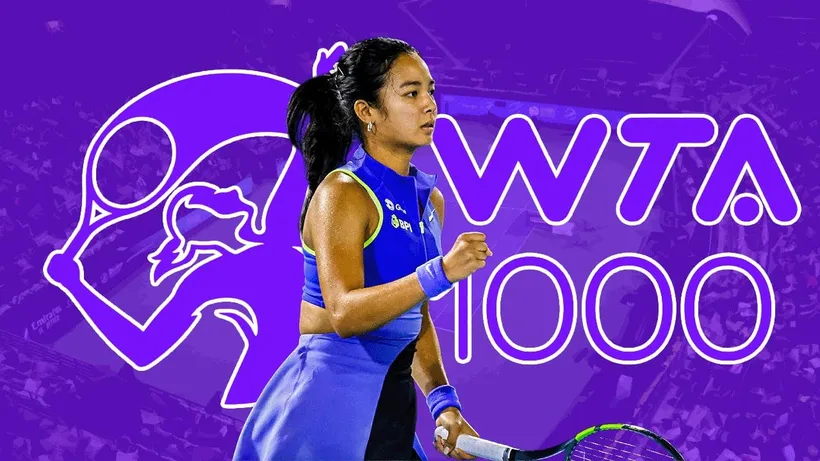
Alex Eala will see action in the Qatar Open, the first of 10 WTA 1000 tournaments in 2026. Art by: JJ Zaldivar / One Sports

Alex Eala is headed for another major test, playing her first WTA 1000 tournament of the year at the Qatar Totalenergies Open in Doha.

Eala nabbed a spot in the main draw which starts Sunday, February 8, joining the likes of top-seeded Iga Swiatek, Australian Open champion Elena Rybakina, defending champion Amanda Anisimova, and Coco Gauff among others.

[RELATED: Amid Abu Dhabi tilt, Alex Eala earns spot in loaded Qatar Open main draw]

Before Eala takes it up a notch in terms of competition, we take a quick look at all the WTA 1000 tournaments this year and why they are the most important after the four Grand Slams.

How many WTA 1000 tournaments are there?

There are a total of 10 WTA 1000 tournaments in the calendar year this 2026 — starting with the Qatar Open and ending with the Wuhan Open in China. Within the 10 events, some run for two weeks and include a larger pool of players.

When are the WTA 1000 tournaments held?

February and March will hold two WTA 1000s each, with the Dubai Duty Free Tennis Championships immediately following the Qatar Open.


Meanwhile, March will have the BNP Paribas Open in Indian Wells, and the Miami Open — where Eala notably reached the semifinals last year.

These first four tournaments are all on hard surface.

In April, the Mutua Madrid Open will kick off the clay tournaments for WTA 1000, followed by the Italian Open in May.

The WTA 1000 returns to the hard court ahead of the US Open with the National Bank Open in Canada and the Cincinnati Open in August.

China also hosts two WTA 1000s with the China Open and the one in Wuhan in October, highlighting the Asian swing.

Notably, there are no WTA (or ATP, for that matter) 1000 tournaments on grass.

What makes a WTA 1000 tournament?

A big part of classifying tournaments in the WTA Tour revolves around points and prize money.

For WTA 1000 tiffs, a total of 1000 points are up for grabs for the winner — meaning success at such a high-level tournament will result in big leaps in the WTA rankings.

In comparison, Grand Slam champions get 2,000 points toward the rankings.

Meanwhile, prize money is also significant.

The Qatar and Dubai WTA 1000 this year both have a prize commitment of over USD 4 million, with 2025 Qatar champion Amanda Anisimova pocketing USD 597,000.

However, the prize money depends on the tournament, as the BNP Paribas Open was the most lucrative WTA 1000 last year with a total prize commitment of almost USD 9.5 million.

While it isn’t necessarily set in paper, WTA 1000 tournaments also need attention to detail to ensure the quality of competition.

From high-end infrastructure to an elite player field with the presence of top-10 players, WTA 1000 tournaments call for only the best in tennis tournaments.

Who gets to play in a WTA 1000 tournament?

Like all events in the WTA Tour, direct entrants are mostly based on player rankings in the WTA, with the top-50 players typically receiving invites to play in the main draw of the tournament.


However, organizers may also extend wild card invites to chosen players — like how Eala initially gained entry into the main draw of the Miami Open in 2025.

Depending on schedule and health conditions, players can also opt to pull out from the tournament, opening up slots for lower-ranked players in the WTA Tour.

Last year, Eala appeared in five WTA 1000 tournaments: Miami, Madrid, Rome, Montreal, and Wuhan.


Luisa Morales is a sports writer with a special interest in promoting women’s sports.

Her coverage highlights include the UAAP, PVL, Southeast Asian Games, and the FIBA World Cup. She also follows Alex Eala, the Philippine women’s national football team, and mixed martial arts.

We use cookies to ensure you the best experience on our website. For more information, click FIND OUT MORE.